
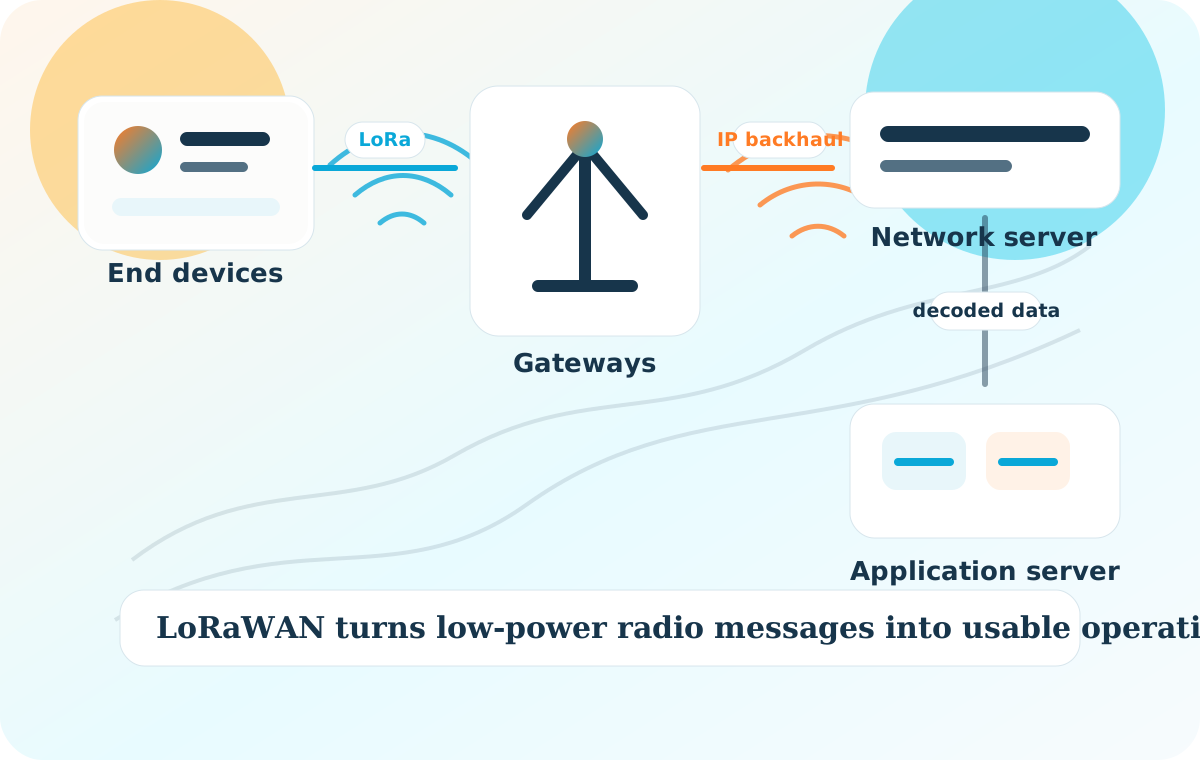
Public, private, and dedicated networks
A public or operated LoRaWAN network can be useful when coverage already exists and you want to avoid owning gateways. A private network gives more control when you deploy your own gateways on your own sites.
A dedicated network is a practical middle ground for many projects: the network is designed around a specific deployment, but the operation can still be supported by an expert provider.
Getting data out
After the network server processes LoRaWAN traffic, data usually leaves through application integrations such as HTTP webhooks, MQTT topics, APIs, databases, dashboards, or IoT platforms.
This is where Device Explorer fits: it helps teams onboard devices, associate payloads with data models, monitor fleets, and route telemetry into operational workflows.
A good integration strategy keeps network metadata, decoded payload values, device identity, location, customer/site context, and alert state together so downstream systems can act without rebuilding the LoRaWAN context.