
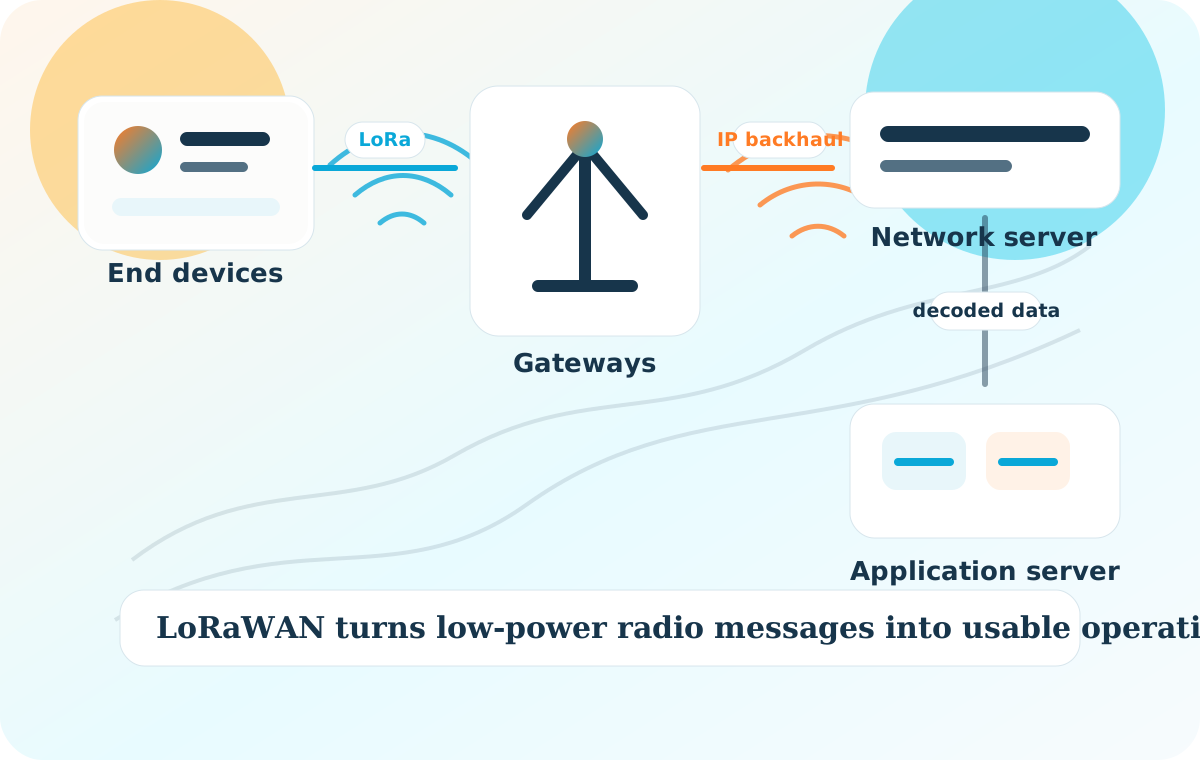
The main building blocks
A LoRaWAN end device measures something, such as temperature, water flow, parking occupancy, GPS position, or soil moisture. It sends a short LoRa radio frame when it has data to report.
One or more gateways hear that radio frame and forward it over IP connectivity to a LoRaWAN network server. The network server removes duplicates, validates the message, manages radio settings, and forwards application data toward the application layer.
This is called a star-of-stars topology: devices are not paired with one gateway, and gateways mostly relay radio traffic instead of making application decisions.
- End device: the battery-powered or mains-powered sensor or actuator.
- Gateway: the radio bridge between LoRa devices and IP networks such as Ethernet, Wi-Fi, fiber, or cellular backhaul.
- Network server: the LoRaWAN control plane for validation, deduplication, ADR, and downlink scheduling.
- Application server: the application-facing layer that receives decoded device data and connects it to software workflows.
- Join server: the component that handles join requests, root-key use, and session key generation in modern LoRaWAN deployments.
Why gateways do not own devices
In LoRaWAN, a device is not attached to one fixed gateway. The same uplink can be received by multiple gateways, and the network server decides which copy to keep.
This star-of-stars model helps coverage, mobility, and resilience. A moving asset can pass through coverage areas without a cellular-style handover process.
Because the protocol is ALOHA-based, end devices can transmit without negotiating a gateway session first. That simplicity is useful for low-power devices, but it also means message frequency, airtime, and downlink volume must be designed carefully.