
What a gateway does
A LoRaWAN gateway listens for LoRa radio frames from end devices, packages the received metadata and payload, and sends that information to a network server over Ethernet, Wi-Fi, cellular, or another backhaul.
A gateway does not normally decode the sensor business value. It forwards the radio packet and metadata such as gateway ID, time, frequency, data rate, RSSI, and SNR so the network server and application layer can process it.
Pilot Things describes gateways as essential equipment for building a LoRaWAN network because they receive long-range sensor signals and transform them into digital data that can be transmitted to Device Explorer. Source: Pilot Things LoRaWAN gateways.
How to choose a gateway
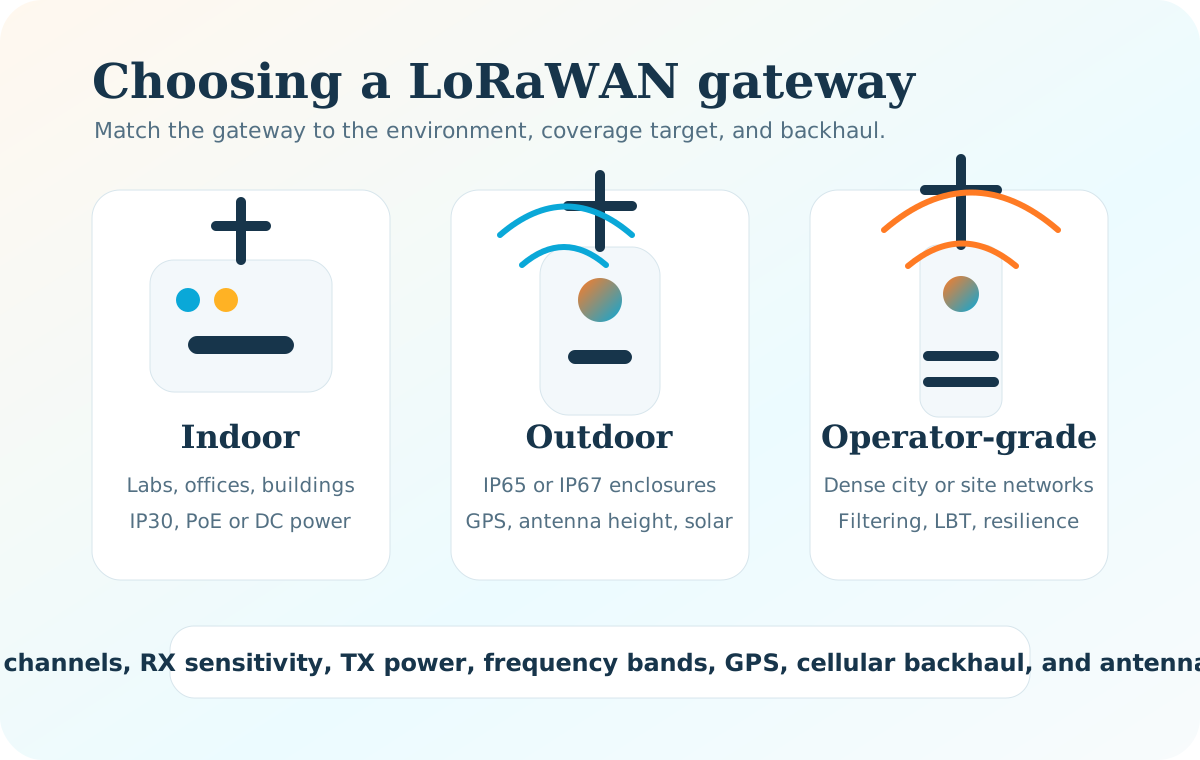
For beginners, the first gateway question is usually environment. Indoor gateways are useful for buildings and light-duty tests. Outdoor gateways add weather protection such as IP65 or IP67 enclosures. Operator-grade gateways are built for heavier city-scale or infrastructure-scale deployments.
The important buying criteria are LoRa channel count, receive sensitivity, transmit power, enclosure rating, power options such as PoE or solar, GPS, optional cellular backhaul, antenna connector type, supported regional frequency bands, and support for LoRaWAN device classes.
- Use indoor gateways for labs, offices, warehouses, and simple building coverage.
- Use outdoor gateways when antenna height, weather exposure, and wider coverage matter.
- Use operator-grade gateways when uptime, deployment density, filtering, lightning protection, LBT, GPS timing, or city-scale planning matter.