
Class A is the default
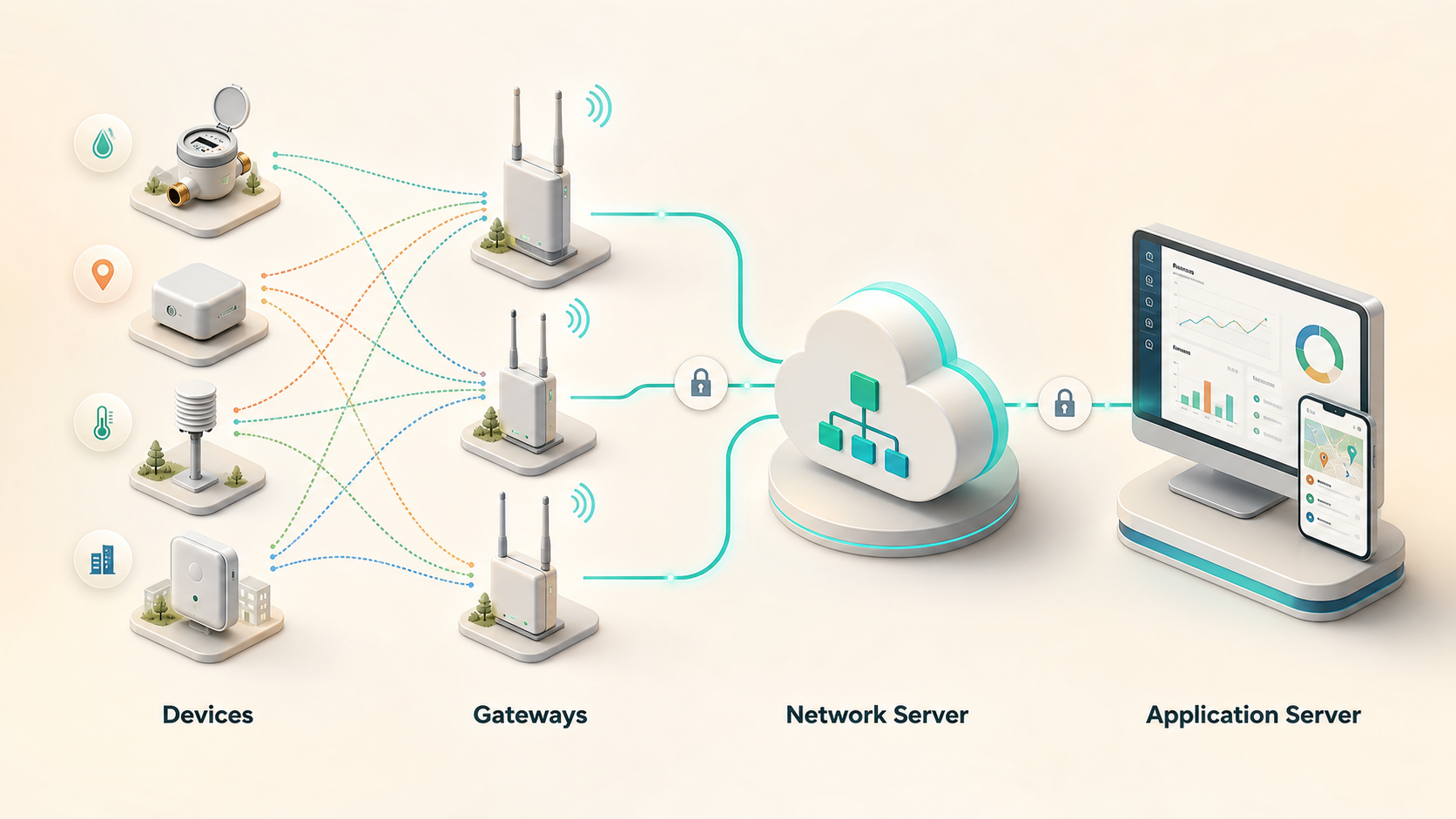
Every LoRaWAN device must support Class A. A Class A device sleeps most of the time, sends an uplink when it has data, and then briefly opens receive windows so the network can answer.
Class A is the best starting point for battery-powered sensors because it keeps radio listening time very short. The tradeoff is downlink latency: the network usually has to wait until the device sends an uplink before it can reply.
Class B and Class C add more listening
Class B adds scheduled receive windows synchronized by network beacons. It reduces downlink waiting time while still trying to preserve battery life.
Class C listens almost continuously except while transmitting. It is useful for powered devices and actuators that need fast commands, but it is usually not appropriate for long battery life.
The class is a deployment decision as much as a device feature. A valve, siren, relay, or lighting controller may need lower command latency than a temperature sensor that only reports measurements.
- Class A: sensors that mostly report data.
- Class B: devices that need scheduled command opportunities.
- Class C: powered devices that need low-latency downlinks.
Buying devices
Many LoRaWAN devices already exist for metering, buildings, agriculture, asset tracking, industrial monitoring, and smart city projects. Beginners do not need to design hardware first; they can buy existing devices online from catalogs such as LoRa World and then connect them to a LoRaWAN network.