
Collect
Connect supported LoRaWAN and cellular devices, receive telemetry, and keep fleet status visible before the data reaches AI or BI systems.
AIoT combines connected sensors with AI-ready data. Device Explorer provides the missing operational layer: supported devices, decoded telemetry, consistent data models, and live context for analytics, automation, and predictive workflows.
Artificial intelligence of things, or AIoT, brings AI technologies together with IoT infrastructure so connected systems can sense, learn from live data, and support automated decisions. That only works when device payloads are decoded, labeled, and attached to a stable model.
Reference: Artificial intelligence of things
Connect supported LoRaWAN and cellular devices, receive telemetry, and keep fleet status visible before the data reaches AI or BI systems.
Transform raw payloads into normalized measurements such as temperature, vibration, occupancy, water flow, voltage, location, and battery state.
Route modeled data into dashboards, business software, alerting flows, and AI pipelines that detect anomalies, forecast maintenance, or recommend field actions.
Device Explorer's supported-device catalog gives teams a practical starting point for AIoT deployments. Instead of building every parser and schema from zero, teams can onboard compatible sensors, trackers, meters, and gateway-connected assets with business-ready telemetry.
The model should preserve device identity, measurement semantics, location, time, quality, and operational context so AI systems can compare signals across manufacturers and use cases.
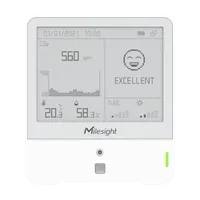
For a device such as the Milesight AM308, Device Explorer turns indoor ambience telemetry into clear, reusable signals. Business teams can monitor comfort and air quality, while AI workflows can compare rooms, detect anomalies, and recommend ventilation or occupancy actions.
Vibration, current, temperature, and runtime signals can feed models that detect drift before equipment failure.
Occupancy, CO2, humidity, light, and energy data can optimize ventilation, comfort, and operating cost.
Water, gas, electricity, tank, pressure, and leak data can support anomaly detection and faster field response.
Location, movement, shock, and environmental signals can help AI workflows identify exceptions in logistics and field operations.
Soil, weather, level, and air-quality data can support forecasts, threshold alerts, and operational recommendations.
Modeled telemetry can be embedded into existing industry software so users act inside the tools they already trust.
Create a free account to evaluate the device catalog, or contact Pilot Things to map your fleet and AIoT workflow requirements.